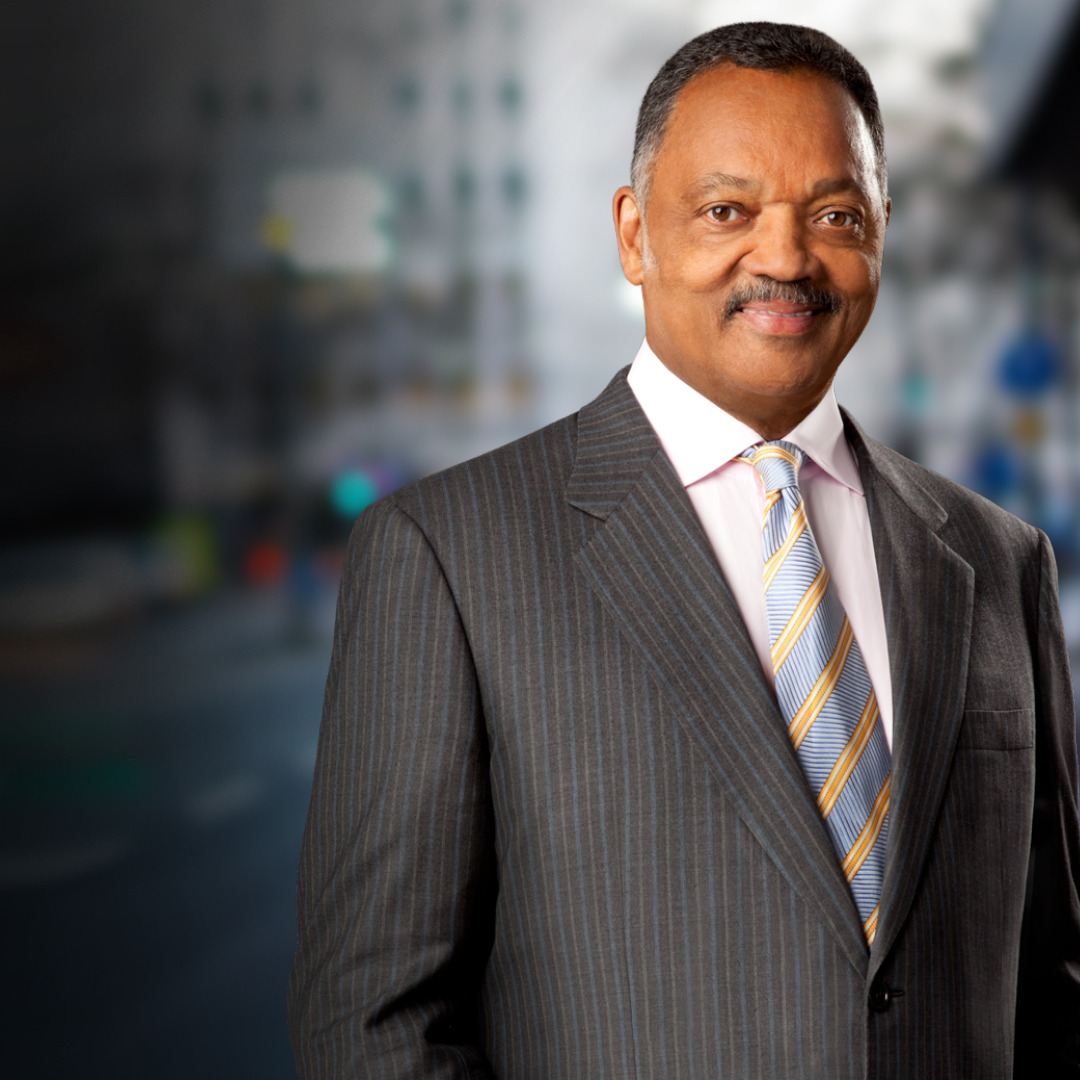
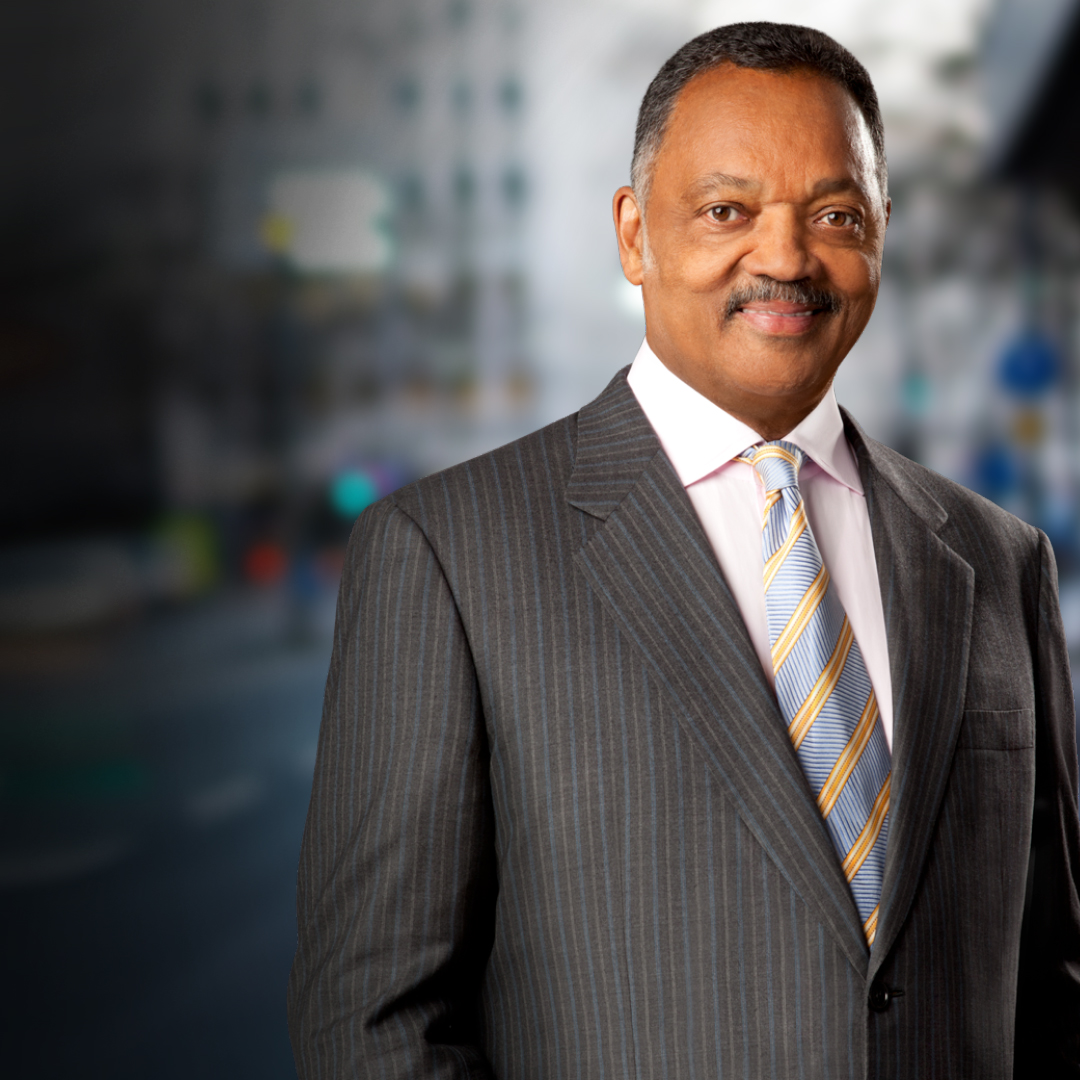
The Reverend Jesse Jackson is known for his early activism and struggles for the civil rights of the African American community, the most vulnerable together with the Reverend Dr. Martin Luther King Jr., is today an indisputable reference in the fight against the oppression of peoples and for human rights on a global scale. On the fiftieth anniversary of the assassination of his friend and comrade in arms (Dr. King), the founder of the Rainbow/PUSH Coalition gives us the opportunity, from his family home in Chicago, to review the news with, of course, an analytical and hopeful look.
eBiz Africa Review (EAR): We are taking a look from the beginning of Rev. Jesse Jackson getting involved in the movement for civil rights with the Rev. Dr. Martin Luther King, Jr. until now.
Reverend Jackson: To put our struggle here in context, next year will be 2019. In 2019 it will be four hundred years after the first 20 Africans arrived on American soil in Jamestown, Virginia in May of 1619. The struggle that we have gone through in the past four centuries can be described in stages. The first stage was Slavery, lasting over 246 years, from 1619 to 1865. The second stage involved a brief 12-year period of Reconstruction (1865-1877) following the American Civil War, the defeat of Reconstruction (1877-1896) and the Supreme Court decision in Plessy v. Ferguson (1896) that established legal apartheid or racially separate Jim Crow laws for 58 years from 1896 to the Brown decision of 1954. Following the end of Reconstruction in 1877, when Union troops were withdrawn from the South, there was the documentation of the mass lynching of over 5,000 blacks between 1877 and 1950. Slavery
“Rosa Parks tested the policy of segregation and law by remaining seated and not giving up her seat to a white person… and Dr. King took up her cause, became the public face of the Montgomery Bus Boycott and ended so-called “separate but equal” laws on public transportation in Montgomery, Alabama”
was institutional and sometimes physically violent – in order to maintain slavery – but injured, disabled or murdered slaves were of no use to the slave owner. He needed slaves that could work his plantations – i.e., plant, cultivate and harvest his crops of cotton, rice, tobacco and more. So, in one sense, this period of lynching was almost more physically violent than slavery itself.
The third stage was the fight for the right to vote. Congress passed the 1965 Voting Rights Act enabling the 15th Amendment to take root 95 years after its ratification.
The fourth stage, which we are now fighting, is access to capital and economic rights. In 1954, the year that the case of Brown v. Board of Education of Topeka, Kansas was decided, the attorney Thurgood Marshall fought to make segregation illegal in public education. But Brown had implications for all public institutions. In 1955 segregation was still in existence in most public places. There were signs regulating public transportation like buses that said blacks must be seated in the back and whites in the front, and if blacks violated the law they would be arrested and punished. Rosa Parks tested this policy and law by remaining seated and not giving up her seat to a white person. Dr. King took up her cause, became the public face of the Montgomery Bus Boycott and ended so-called “separate but equal” laws on public transportation in Montgomery, Alabama. It wasn’t just a victory for Montgomery. It was a victory for the entire South.
The Montgomery Movement inspired massive activism throughout the South and by the 1960’s we were marching all over the country to end the vestiges of segregation in public transportation with Freedom Rides and in public restaurants with sit-ins in Greensboro, North Carolina and elsewhere. On August 28, 1963, before 250,000 people gathered in Washington, DC before the Lincoln Memorial, Dr. King galvanized the nation with a speech called “I Have A Dream.” The reality was, the day he gave that speech, from Texas across to Florida and up to Maryland, we couldn’t use a single public toilet, restaurant or motel. But the March and speech helped to galvanize Congress to vote for the 1964 Public Accommodations Act.
The following year John Lewis and Dr. King led a voting rights movement in Selma, Alabama that caused Congress to pass the 1965 Voting Rights Act which, 95 years later, implemented the 15th Amendment’s mandate to outlaw voter discrimination on the basis of race, the first time that blacks had a federally protected right to vote.
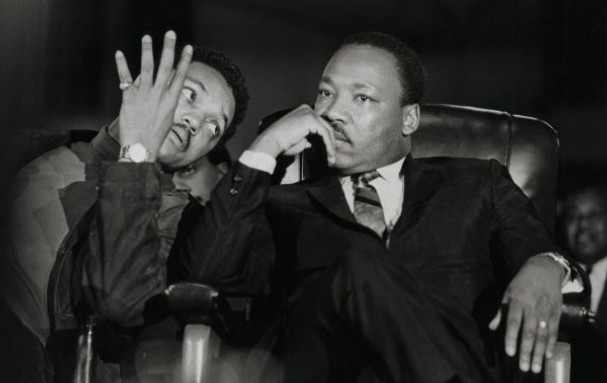
“There were many reasons why Dr. Martin Luther King, Jr. followed the non-violent active resistance path that he had set for himself. He wanted a better world for his generation, for the younger generation that was growing up, as well as for those generations yet to come”
EAR: Fifty years after the anniversary of his assassination what is your analysis of the legacy of the Reverend Martin Luther King, Jr.?
Rev. Jackson: I was privileged to be with him on his last birthday celebration on January 15, 1968. It was a brief celebration because he spent most of the day organizing the Poor Peoples’ Campaign. The season leading to his assassination in 1968 was mixed. He had accomplished many things for black people, but he was becoming increasingly unpopular because of his opposition to the Vietnam War. Even in the black community, this was costing him support. In spite of this opposition, he was pressing on and had convened church leaders in the Deep South, along with poor whites, Native Americans, Hispanics, Asian Americans, and included anyone that was considered a person of color or otherwise known as poor to mobilize for the Poor Peoples’ Campaign. In the weeks leading up to the Campaign, Dr. King had been jailed protesting the war in Vietnam, arguing we shouldn’t be fighting a distant and immoral war in Vietnam. We should be healing at home. But Americans weren’t used to blacks speaking out about global issues and his outspokenness was controversial.
Dr. King was assassinated on April 4th on the balcony of the Lorraine Motel in Memphis, Tennessee after years of fighting against segregated, against the Vietnam War, fighting for African American’s civil rights and now beginning to fight for an expansion of economic rights for all Americans. There were many reasons why Dr. Martin Luther King, Jr. followed the non-violent active resistance path that he had set for himself. He wanted a better world for his generation, for the younger generation that was growing up, as well as for those generations yet to come. Today, as we seek a better America for all Americans the former Confederate States hold the key. The ex-slave southern states hold the key to liberating America and African Americans hold the key to liberating the South. In 2017 we won the U.S. senate race in Alabama and beat the extreme right wing. We won the races in Virginia. So we’ve never stopped fighting in the fifty years since Dr. King’s death. We’re still winning because we’ve refused to surrender.
EAR: What is the definition of civil rights according to the Reverend Jesse Jackson?
Rev. Jackson: Equal access, equal opportunity and equal protection under the law for all. Slavery was legal. We had to make slavery illegal. Jim Crowe segregation laws were legal. We desegregated Jim Crow laws and made them illegal. We fought to change laws that denied our basic rights. Now we are at another stage in our history. We are fighting not just to be free but also to be equal. And as we fought to change discriminatory, unfair and unjust laws not only did our legal rights expand, but also so did the legal rights of others – e.g., the rights of other people of color, women’s rights, and the rights of disabled people and LGBTQ rights.
EAR: What is the common point or the parallel in the forms or similarities between Nelson Mandela and Rev Martin Luther King, two giants that you had the opportunity to meet?
“Civil rights are equal access, equal opportunity and equal protection under the law for all…. And as we fought to change discriminatory, unfair and unjust laws not only did our legal rights expand, but also so did the legal rights of others – e.g., the rights of other people of color, women’s rights, and the rights of disabled people and LGBTQ rights”
Rev. Jackson: In Africa, we were described as in apartheid. In America, we were described as segregated. At one point in time, I had the opportunity to work with Nelson Mandela, to work against apartheid, segregation, and inequality in both North America and South Africa. Both countries have struggled for equal rights for centuries. In the United States, we had a four-year Civil War that brought about a change in our Constitution – the addition of the 13th Amendment that ended slavery in 1865. With the addition of the Reconstruction Amendments – the 13th, 14th and 15th Amendments – the Constitution began to allow the law to work in our favor, as the law, applied together, started to work to fight the injustices with which the system had subjugated us. However, in Africa, though there were similar problems, they resolved external colonialism and internal apartheid more independently. Both countries fought toward one common goal, and that was to gain universal access and human rights under the law for all people. But we have learned throughout the centuries that we can change the rules but until change comes to each and every person we will continue to be free but not equal, and that must change.
“In Africa, we were described as in apartheid. In America, we were described as segregated. In different moments in time, I had the opportunity to work with both Dr. King and with Nelson Mandela, to work against apartheid, segregation and inequality in both North America and South Africa”
EAR: You are recognized as a peacemaker and an international peace activist throughout the world. There are many conflicts in different parts of the world. Is there any advice you would like to share with these main actors to make a better world?
Rev. Jackson: Human rights will always keep the peace. Keeping the peace requires a set of rules, just like playing rugby or soccer. We must fight for an even playing field, where the rules are public and the goals are clear. Under those conditions of transparency, we do well. The key to peace is justice and the key to justice is having an equal foundation, equal opportunity and equal protection under the law. I’ve secured the release of Americans from prison in Syria, Colombia, and Yugoslavia and around the world and each time I’ve done it by working hard and finding common ground with the person who was holding the Americans hostage.
The worst thing whites did to us was erasing our memory. I remember they used to ask us, do you remember your grandparents? Yes. Do you remember your great-grandparents? No. Do you remember your great-great-grandparents? Of course, I didn’t. When Jesus spoke of Moses and David, as in speaking about his grandparents, it was like he had two thousand years of lineage. And so we, as African American leaders, must seek to regain our ability to rekindle and pursue our lineage, and put a light in those dark spaces, when we reflect on slavery and its aftereffects over four hundred years, a short period in the grand scheme of time. Then we must connect to the additional hundreds of years of history in our Mother continent of Africa.
“Do not self-destruct; do not let negativity dominate your inner self. Do not see anyone else as superior or you feel inferior to anyone else. There is no supreme race that can, do or should control others”
EAR: What is the final message to our audience from the Rev. Jesse Jackson?
Rev. Jackson: Do not self-destruct. Do not let negativity dominate your inner self. Do not see anyone else as superior or you feel inferior to anyone else. There is no supreme race that can, do or should control others. One thing that was taken away from us in slavery was literacy because it’s hard to oppress a literate people. Lastly, we must see what we are capable of together. We must thank God for a strong mind and for the courage to resist and overcome unjust conditions. We thank God for our spirituality, for our strong minds and we must always remain hopeful.
By Franck Olivier Kra @franckokra.